

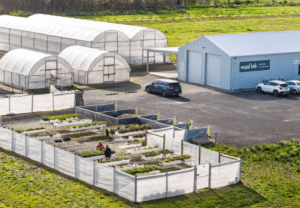
The Wollert Community Farm is a place in Melbourne’s outer northern suburbs where the local community can connect, learn, and prosper through environmental and agricultural activities.
Developed as a partnership between Whittlesea Community Connections and Yarra Valley Water and supported by the City of Whittlesea and Melbourne Polytechnic, the Farm is an environmental education hub and local food system that aims to restore nature and ensure that local community members can live and eat well.
The Farm at Wollert
The Farm is being completed in stages. The completion of stage one allowed Whittlesea Community Connections to move onto the site in May 2025
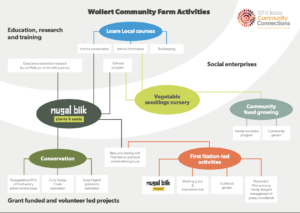
Current Activities at the Farm include:
- Our social enterprise indigenous plant nursery, nugal biik plants and seeds.
- Education, training and volunteering
- Conservation and land management
- First Nations-led activities
- Traditional Foods Garden
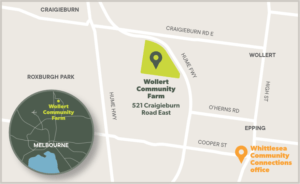
Download Wollert Community Farm Map
More than a Farm
The Farm’s purpose is to create a legacy that changes lives, helps our community thrive, and restores and protects the environment. Caring for Country and helping people break the cycle of disadvantage through learning and connection are at the heart of this exciting initiative.
The Farm will feature a unique indoor and outdoor learning hub that provides training, education, and employment opportunities in agriculture, horticulture, and conservation for local community members, students, and refugees.
Its seed-to-soil-to-plate initiatives will ensure a flow of fresh, affordable, sustainably and locally grown produce to those who need it most in the City of Whittlesea and build closer relationships between producers and consumers.
The Farm’s social enterprises will develop goods and services that support local communities, businesses and industry.
Championing sustainable land-use and circular-economy approaches, the Farm will demonstrate the use of recycled water while embedding Traditional Custodian principles of caring for country into its land management practices.
What’s happening at the Farm?
For the latest updates and a full calendar of exciting events, remember to visit Home – Whittlesea Community Connections. Join us in celebrating community, nature and growth. Stay connected with the vibrant happenings at Wollert Community Farm!
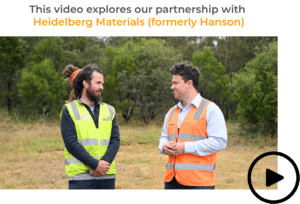
WCC works with Heidelberg Materials, who operate the Wollert landfill and quarry in our area and were our first nugal biik plants and seeds customer.
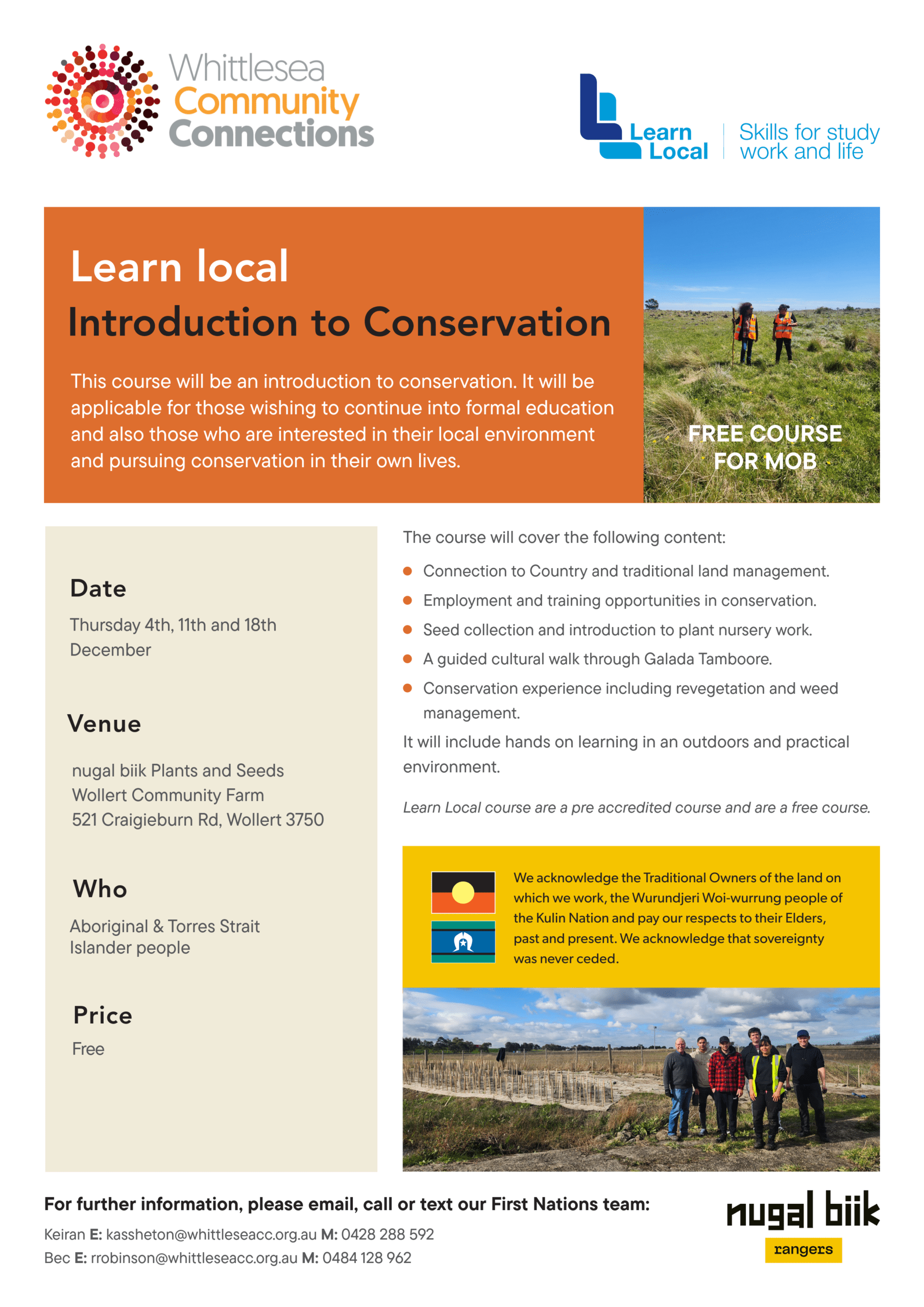
Upcoming Introduction to Conservation Course
How did Wollert Community Farm start?
Whittlesea Community Connections’ CEO Alex Haynes planted the seeds for the farm concept back in 2018. Alex approached Yarra Valley Water to see if buffer land around the Aurora Treatment Plant in Wollert could be better used for community benefit. That simple conversation led to the concept of Wollert Community Farm, a place where the community can come together to connect, learn and prosper.
Yarra Valley Water is providing the land and recycled water for this innovative project, whilst Whittlesea Community Connections is providing programs and activities that address disadvantage, create opportunities, and help build a climate-resilient community.
Since the early beginnings in 2019, a rigorous collaborative planning process has identified the optimal range of activities for the farm. The project received all the necessary approvals, including a council planning permit in mid-2022. Construction of stage one infrastructure kicked off later that year and was completed in May 2025.
Who are the project partners?
Whittlesea Community Connections (WCC) is a place-based, community-led organisation delivering a range of services and programs to meet community needs and encourage participation and involvement.
WCC’s involvement in the WCF and partnership is driven by the opportunities to build a more connected community, support a stronger local economy, improve local conservation outcomes, support a more resilient local food system and advance opportunities for First Nations-led initiatives.
Yarra Valley Water (YVW) is Melbourne’s largest water retailer and owns the site where the WCF will be located. YVW also operates the adjacent wastewater treatment plant and Waste-to-Energy facility. YVW’s purpose is to create a brighter future for communities and the natural environment, and it seeks to deliver greater community and environmental value through this partnership.
YVW sees the partnership and WCF as an opportunity to demonstrate more valuable uses of treatment plant buffer land and to embed Traditional Custodian principles of caring for country into land management at the site.
What are the core drivers of the Farm project?
The Farm’s guiding drivers are:
- Food security – supporting a resilient and fair local food system through community-based peri-urban farming
- Wellbeing and empowerment – improving health and wellbeing through social engagement and connection to nature; providing pathways from hardship to opportunity
- Circular economy – demonstrating circular economy practice and sustainable peri-urban environments
- Training and employment – facilitating formal education and training in agriculture, horticulture and conservation; promoting inclusive economic participation through partnerships, programs and enterprises
- Biodiversity – restoring natural heritage on site and beyond, through revegetation and ecological management
- First Nations – providing a place for First Nations initiatives and connection to Country
When will the Farm be completed?
The first stage of the Farm’s masterplan was completed in 2025. This included the delivery of road access, drainage, fencing, a multi-purpose building, utilities and nursery infrastructure. Funding for stage two was secured through a Commonwealth government grant and partner contributions. This new construction phase will develop a community training building and carpark to support the establishment of the full range of planned activities. Building work will begin in mid-2026 and be completed by mid-2027.
As the Farm develops, we’ll be delivering a broader range of training opportunities, including beekeeping, crop trials, seed production, conservation, and land management and regenerative cattle grazing. It will also allow us to pursue more in-depth resource-sharing with First Nations’ peoples and local conservation groups, provide more extensive community food-growing opportunities, develop an indigenous interpretive trail for community education, and advance opportunities for refugee skills-building and employment.
How can I get involved?
For information on up-and-coming events and volunteering opportunities, follow Whittlesea Community Connections on:
Facebook| Instagram | LinkedIn
For other enquiries, please contact Wollert Community Farm Team Leader Viktor Faulknor via vfaulknor@whittleseacc.org.au or 0483294547.